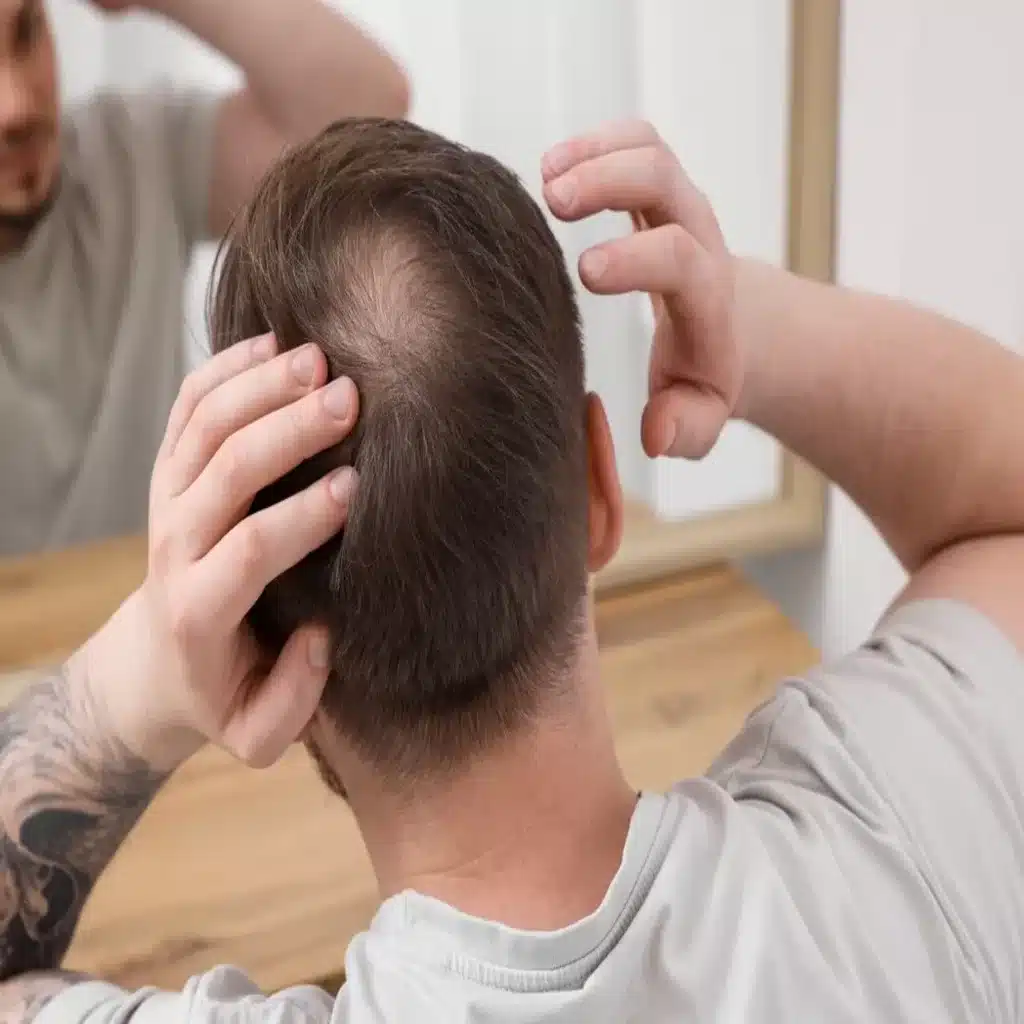
Hormones can influence the growth cycle of scalp hair. Pattern thinning, temporary shedding and hair loss caused by scalp disease can look different, so examination usually guides which hormone tests, if any, are useful.
Thyroid hormones and androgens
Underactive or overactive thyroid function can contribute to diffuse shedding. Androgens, including dihydrotestosterone (DHT), can contribute to finer hairs in genetically susceptible follicles. Pattern thinning can occur even when measured androgen levels are normal.
Pregnancy, menopause and stress
Temporary shedding may occur in the months after childbirth. Some people first notice pattern thinning around menopause. A major illness or stress can also trigger shedding. Routine cortisol testing is generally not used to investigate typical hair loss.
Which findings guide testing?
Mention changes in periods, excess facial hair, acne, weight changes, fatigue and any recent medication changes. Your clinician may check thyroid function or investigate androgen excess if indicated. Treatment and the likelihood of regrowth depend on the cause.