
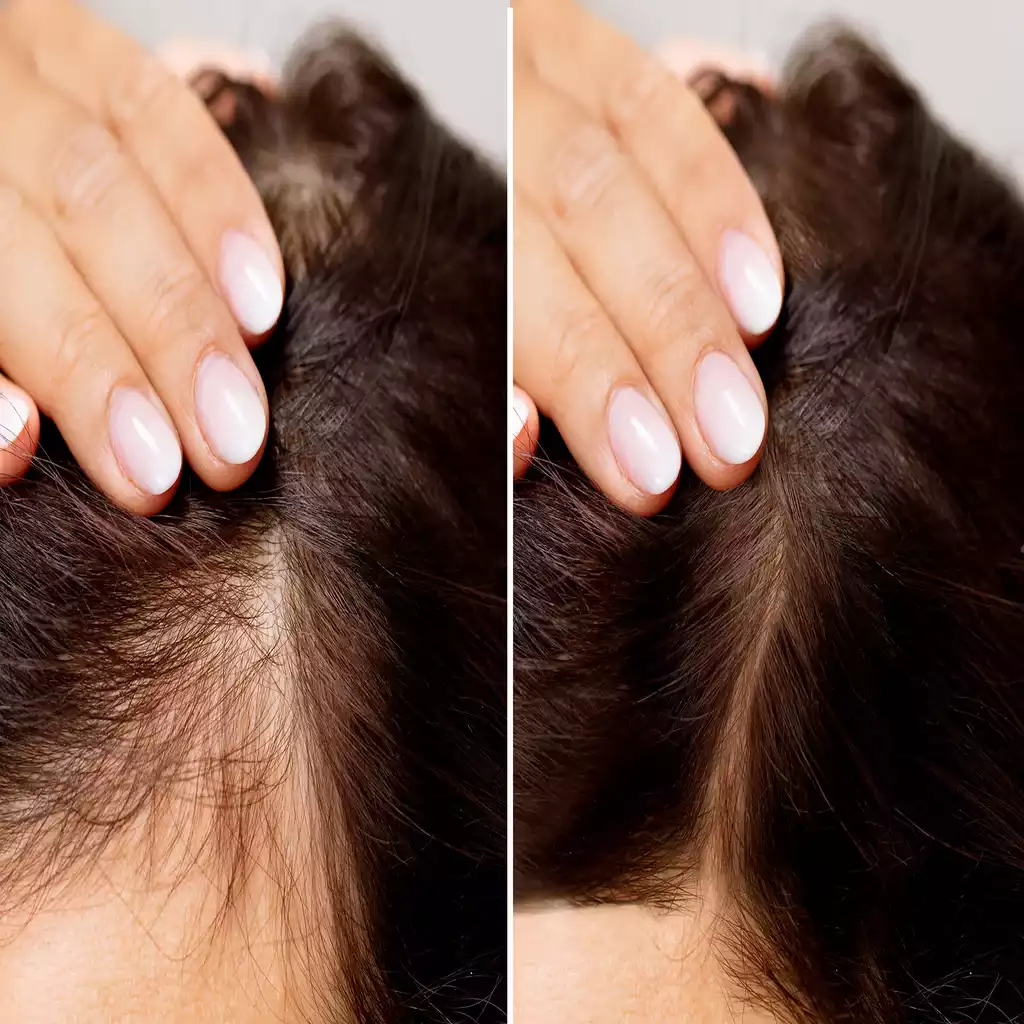
Hair loss can look like extra strands in the shower, thinning over the crown or bald patches. The right next step depends on the pattern, how quickly it developed and whether there are symptoms such as itching, pain or fatigue.
Common causes
Illness, stress, sudden weight loss and some medicines can trigger temporary shedding. Tight braids, extensions or ponytails can pull on the follicles. Heat or chemical treatments can break the hair shaft. Hormonal or thyroid problems, iron deficiency, scalp conditions, alopecia areata and inherited pattern thinning are other possibilities.
How to tell different patterns apart
- Diffuse shedding: More hair than usual falls from across the scalp.
- Pattern thinning: The part may widen or the crown gradually thin.
- Patchy loss: Smooth bald spots or patches with scaling need an assessment.
- Traction or breakage: Loss along the edges and short broken hairs may reflect tension or damage.
What can you do?
Use gentle hair care, avoid tight styles and reduce heat or harsh chemical treatments. Eat enough protein and a varied diet. Seek advice before taking iron or other supplements. Washing does not cause most forms of hair loss, although loose hairs are often more visible when you wash or brush.
When to see a clinician
Get an assessment if loss is sudden, patchy or progressing, or if you have redness, pain, scaling, fatigue, irregular periods or hair loss elsewhere. A dermatologist can examine the scalp and order targeted tests when appropriate.
American Academy of Dermatology: Hair loss diagnosis and treatment