Nutrients for healthy hair: Iron, vitamin D, vitamin B12 and zinc all have roles in health. Learn which nutrition problems may contribute to shedding, how to get these nutrients from food and when testing may help.
View the hair loss testing package · Find a branch
The Arabic source lists a November 2026 review by Dr. Ahmed Faisal Al Alawi, a molecular genetics specialist. This English edition updates some medical wording.
Changes in hair can affect confidence. Nutrition and environmental damage are two factors among many. This guide explains how nutrients support the body, which foods supply them and which signs may warrant a closer look. The right response depends on what is causing the change in your hair.
Causes of hair loss
- Family history: Hereditary pattern hair loss can affect men and women. It often appears as a receding hairline, thinning at the crown or a widening part.
- Hormonal changes: Postpartum changes, menopause and thyroid disorders can affect hair growth. Discuss the timing and any other symptoms with your clinician.
- Stress and physical strain: Major illness, surgery, rapid weight change or significant stress can trigger temporary diffuse shedding.
- Nutrition: Inadequate calorie or protein intake and some deficiencies, including iron or zinc deficiency, may contribute.
- Hair care: Tight styles can pull on follicles. Frequent heat and harsh chemical treatments can damage the shaft and cause breakage.
- Health conditions: Alopecia areata, anemia and some scalp or autoimmune conditions can cause or accompany hair loss.
- Medicines and treatments: Chemotherapy and some medicines can affect hair. If shedding starts after a new prescription, ask the prescriber before changing it.
- Age: Hair may gradually become finer with age. A change that is sudden or patchy deserves an assessment.
A clinician can examine the scalp and review the history before recommending tests. Avoid buying several hair supplements before you know whether you need them.
Vitamins and other measurements relevant to hair health
- Iron and ferritin: Iron supports oxygen transport. Ferritin helps assess iron stores. Low iron can accompany shedding, fatigue or pallor, although those symptoms have other causes.
- Vitamin D: Vitamin D signaling is involved in the follicle cycle. Low levels have been reported in some people with hair loss, but supplementation has not been shown to reverse every type. See when to take vitamin D.
- Vitamin B12: B12 supports blood and nerve function. A deficiency can cause fatigue, numbness or problems with concentration. Hair changes alone do not indicate B12 deficiency.
- Zinc: Zinc supports normal protein metabolism and tissue function. In some people, deficiency contributes to thinning or slow growth.
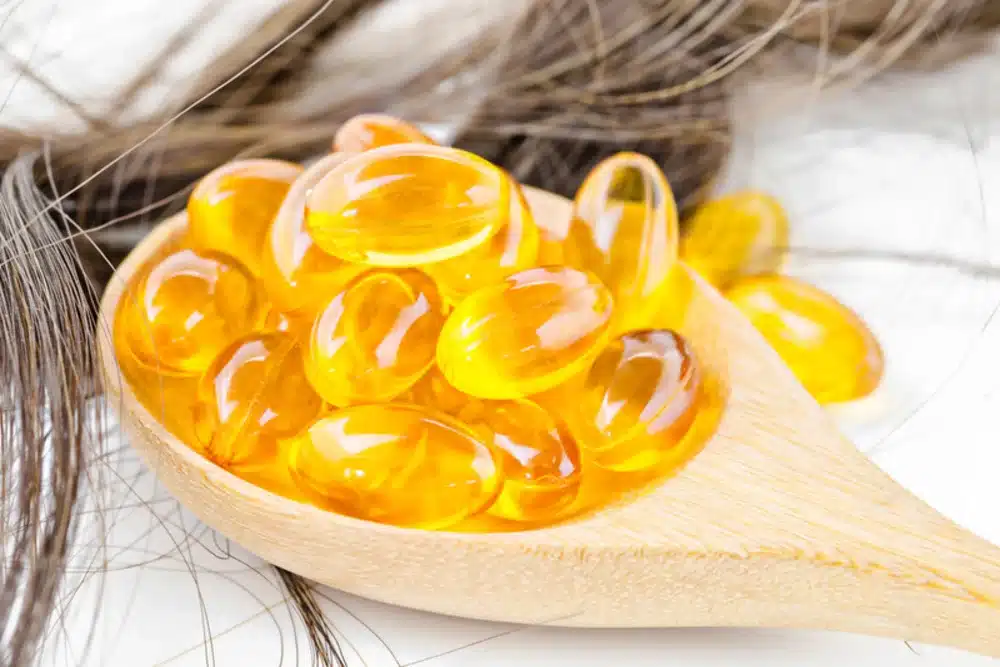
- Biotin: Deficiency can affect hair but is uncommon. Extra biotin is not a routine treatment for shedding.
- Thyroid function: Thyroid hormones are not vitamins. If symptoms or history suggest a thyroid disorder, a clinician may check thyroid function as part of the assessment.
Vitamin A helps regulate skin cell growth, but excessive supplemental vitamin A can cause shedding. Vitamin C supports collagen formation and improves absorption of iron from plant foods. Vitamin E has antioxidant functions. B vitamins, including biotin and B12, have separate metabolic roles. These functions do not establish that extra doses improve hair density. Ask which vitamin tests, if any, would guide treatment.
Possible signs of a nutrient problem
- More shedding than usual or visibly reduced density.
- Hair that breaks easily or feels unusually brittle.
- A dry or irritated scalp.
- Slower growth or changes in hair texture.
None of these signs identifies a specific deficiency. Scalp conditions, hair care practices and inherited hair loss can look similar. When several measurements are indicated, ask the lab what its vitamin and mineral package includes.
Is one vitamin responsible for hair density?
No single vitamin determines hair density. Biotin is involved in metabolism, and replacing it can help if a deficiency is present. There is limited evidence that supplements improve hair thickness, strength or elasticity in people without deficiency.
Which deficiencies may contribute to shedding?
In some cases, low iron, zinc or other nutrients may contribute. Low vitamin D has been associated with some forms of hair loss. Severe vitamin C deficiency can change hair or skin, and biotin deficiency is uncommon. A clinician can investigate other causes alongside nutrition. See common signs of vitamin deficiency.
Natural sources of vitamin B12
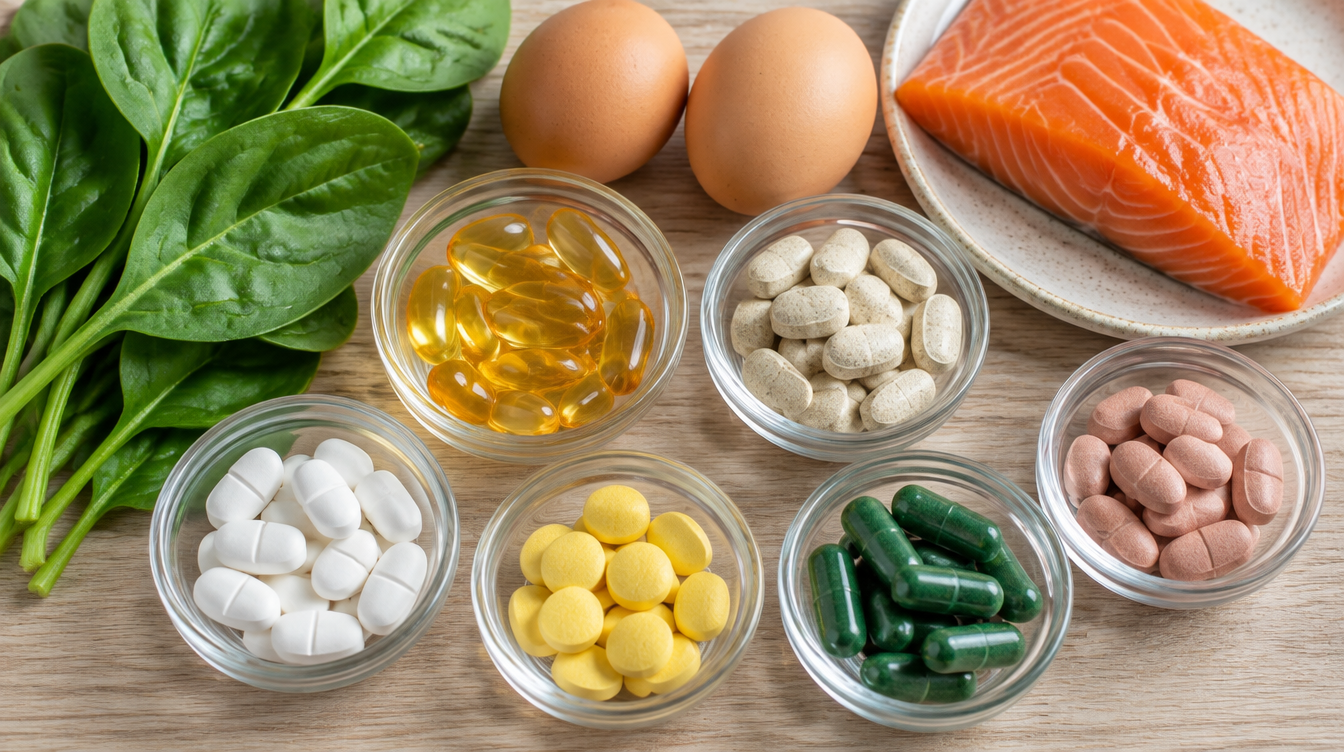
B12 is found in beef, chicken, turkey, salmon, tuna, sardines, shellfish, milk, yogurt, cheese and eggs. Fortified foods can provide B12 for people who avoid animal products. If a condition affects absorption, food alone may not correct deficiency.
Food sources of nutrients for hair
- Vitamin A: Carrots, sweet potatoes and spinach supply carotenoids the body can convert to vitamin A. Celery and squash can add variety to the diet.
- Vitamin C: Oranges, strawberries, red peppers, broccoli and lemon are sources.
- Vitamin D: Options include salmon, sardines and fortified milk or other fortified products. Meat can contain smaller amounts.
- Vitamin E: Nuts, seeds and wheat germ oil can contribute vitamin E.
- B vitamins: Eggs, meat, fish and whole grains, including brown rice, supply different B vitamins. B12 is not naturally present in plain whole grains.
A varied intake of produce, grains and protein foods can help cover these needs.
Common types of hair supplements
- Biotin: Check whether you need it. High-dose biotin can interfere with some laboratory tests. Tell your clinician and the lab if you take it.
- B-complex: These products combine B vitamins such as B1, B2, B3, B6 and B12. The amounts differ by product.
- Vitamin C: It supports collagen formation, but a supplement is not a proven hair regrowth treatment.
- Vitamin E: It has antioxidant functions. A supplement has not been established as a way to improve scalp circulation or regrow hair.
Minerals and other components that matter
- Zinc: Supports normal cell and protein function.
- Iron: Helps red blood cells carry oxygen.
- Selenium: Supports antioxidant enzymes. Too much can cause hair loss.
- Magnesium: Is involved in protein synthesis and many other processes.
- Sulfur: Sulfur-containing amino acids form part of keratin. A diet with adequate protein supplies these amino acids.
Foods such as meat, poultry, fish, whole grains, fruits and vegetables supply a range of nutrients. Read about daily vitamin and mineral needs.
Practical tips for healthy hair
- Eat a varied diet with enough protein and drink adequate fluids.
- Choose a shampoo and conditioner that suit your hair and scalp.
- Reduce harsh chemical processes, excessive heat and tight styling.
- Condition dry hair. Products such as argan or coconut oil can change how the hair feels. Stop using a product that irritates your scalp.
- Address ongoing stress when possible, and get help if it affects your well-being.
- Trim split ends if desired. Trimming improves the appearance of damaged ends but does not speed growth from the scalp.
- Avoid smoking and limit alcohol for general health.
How these nutrients relate to skin health
Vitamin A supports normal skin cell renewal. Prescription retinoids are a separate treatment for conditions such as acne. Vitamin C is needed to make collagen, and vitamin E has antioxidant functions. Some B vitamins, including niacin and biotin, help maintain normal skin function. Getting enough of these nutrients is important, but taking extra supplements is not a reliable way to treat acne, wrinkles or skin irritation.
Frequently asked questions
- Should I take a hair supplement?
- It may help if a clinician identifies a deficiency that is contributing to hair changes. Mention dietary restrictions or conditions that interfere with absorption. Get an assessment for persistent shedding, bald patches, scalp pain or a widening part before relying on a supplement.
If your clinician recommends measuring several nutrients, check the hair loss package and ask which tests it includes. For booking and home visit availability in Riyadh, Khamis Mushait, Hail, Najran or Tabuk, call 920022632, contact the lab on WhatsApp or check the branches.
This article is educational. Consult a clinician for diagnosis or treatment. Trust Medical Labs provides laboratory testing.
American Academy of Dermatology: Hair loss diagnosis and treatment · NIH: Biotin