

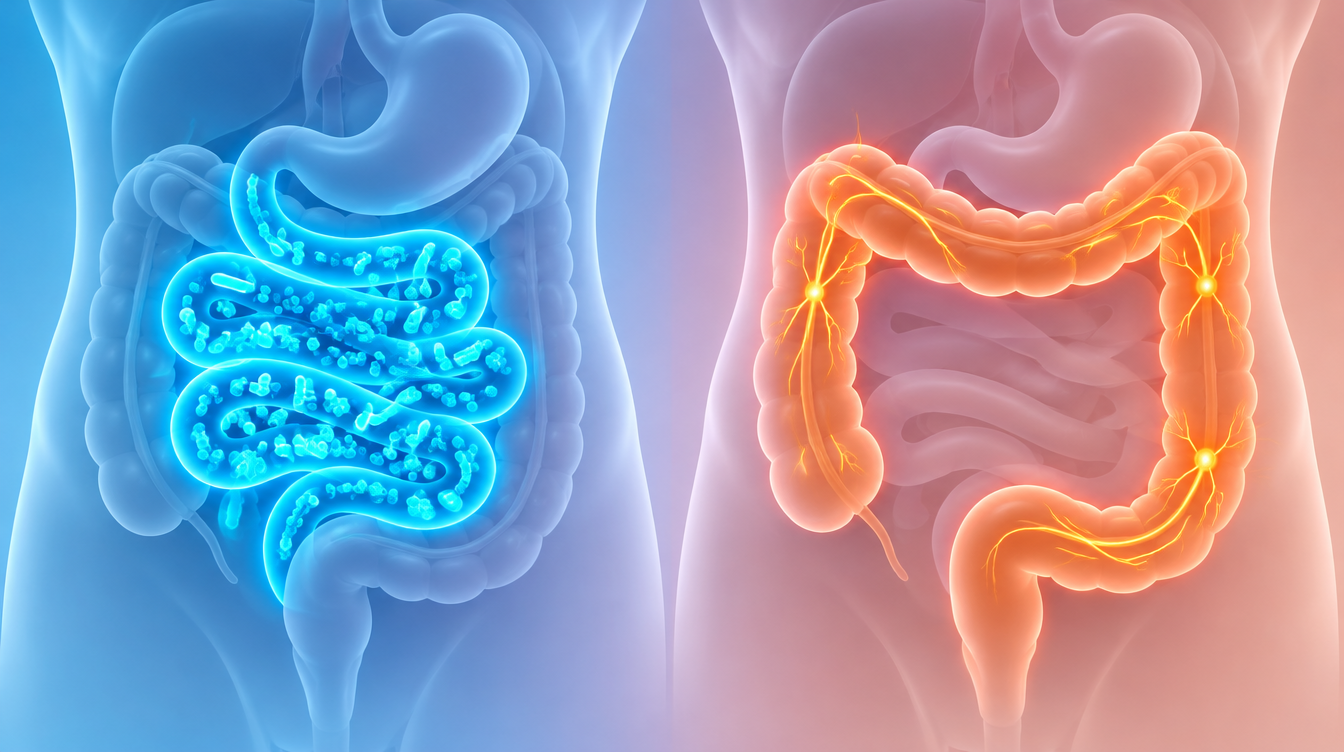
 🔍 SIBO or IBS? Understanding the Difference
How Clinicians Distinguish Them
Similar symptoms need assessment of history, examination, and suitable tests.
🧠 The Gut–Brain Axis💨 Three-Gas Breath Testing📋 Clinical Assessment Clarify Your Diagnosis💬 Ask Us on WhatsAppDr Ahmad Faisal Al-Alawi, Molecular Genetics Specialist — PhD, Sorbonne University, Paris | FRCPath, United Kingdom. Last reviewed: November 2026Article Contents
- What Is SIBO?
- What Is IBS?
- Why Are They Confused?
- Frequently Asked Questions
- Diet and Lifestyle Clues
- The Clinician's Role
- When to Consider Breath Testing
- Benefits of an Appropriate Diagnosis
Differences and Diagnostic Approaches
📘 Read Also: For a fuller comparison, see The Complete SIBO Guide: Small Intestinal Bacterial Overgrowth.How Clinicians Distinguish SIBO and IBS — Interest has grown in small intestinal bacterial overgrowth because its symptoms overlap with irritable bowel syndrome, which can complicate assessment.
This article explains the differences, and how history and investigations help, using information from Mayo Clinic.

1
What Is SIBO?
SIBO affects the small intestine; IBS involves altered gut–brain interaction, sensitivity, and bowel function.SIBO It involves excess bacteria in the small intestine, potentially affecting digestion and absorption.
Impaired motility or anatomical changes can contribute.
We Are Here to Help
Complete the Form
and We Will Contact You.
2
Common SIBO Symptoms Include:
Post-Meal Bloating.
Frequent Gas.
Diarrhea or Constipation.
Unexplained Weight Loss.
B12 or Iron Deficiency in Some Cases.
3
What Is IBS?
By contrast, irritable bowel syndrome IBS is a disorder of gut–brain interaction, not defined by microbial overgrowth, although the conditions may coexist.
Common IBS Symptoms:
Recurrent Pain Related to Bowel Movements.
Constipation, Diarrhea, or Both.
Incomplete Emptying Sensation.
Bloating That May Respond to Diet or Stress Management.
4
Why Are They Confused?
Confusion occurs because symptoms overlap, particularly bloating, gas, and bowel changes.
A distinction concerns mechanisms and management: SIBO involves overgrowth that may respond to prescribed antibiotics, while IBS is a persistent gut–brain interaction disorder managed with individualized dietary, medical, and behavioral approaches.
Read Also: Stress, Digestive Symptoms and SIBO
How Does Assessment Work?
1. Detailed Medical History
The clinician asks about timing, foods, previous illness, medicines, and treatment response.
For Example:
If uncertainty remains, a clinician may consider home SIBO testing through Trust Medical Labs.
For SIBO bloating may occur even after small meals.
With irritable bowel syndrome, stress may influence pain, although this is not exclusive to IBS.
2. Physical Examination
The clinician considers distension, tenderness, bowel sounds, and other findings.
Possible signs requiring further assessment include malabsorption or or weight loss, which should not be attributed to uncomplicated IBS without review.
3. Laboratory Investigations
Suitable investigations may clarify the picture:
أ. Breath testing (Breath Test)
This is a common SIBO investigation called hydrogen or methane breath testing.
Gases are measured after glucose or lactulose.
A qualifying hydrogen rise may support SIBO; elevated methane supports intestinal methanogen overgrowth.
Normal results do not automatically diagnose IBS.
B. Blood Tests
Testing may assess nutrient deficiencies such as B12 or iron when indicated; these findings have several possible causes.
C. Endoscopy or Imaging
Selected cases may need digestive endoscopy or or CT imaging to investigate another suspected condition.
5
Frequently Asked Questions
Can SIBO and IBS Coexist?▼ Yes, though estimates vary by population and diagnostic method. Treatment may help selected patients. Is SIBO always permanent?▼ It can improve, but recurrence is possible. IBS often needs ongoing symptom management. Can symptoms alone diagnose SIBO?▼ No. Assessment and suitable investigations are needed. 6Diet and Lifestyle Clues
SIBO:
Symptoms may worsen after fermentable carbohydrates such as some legumes and onions.
Some patients have fatty stools because of malabsorption.
Appropriately selected patients may improve with prescribed antibiotics.
IBS:
Symptoms may relate to stress or poor sleep.
and improve with limiting personal triggers such as caffeine or fatty foods.
Antibiotics are not suitable for everyone with IBS.
7
The Clinician's Role
Differentiation needs a comprehensive assessment including:
Diet Review.
Food–Symptom Associations.
Appropriate Tests.
Treatment Response.
An incorrect diagnosis may leave persistent symptoms if another cause is overlooked.
8
When to Consider Breath Testing
Consider assessment when:
Symptoms persist despite appropriate IBS care.
Bloating is substantial or ongoing.
There is unexplained weight loss or anemia.
Persistent bad breath accompanies digestive symptoms after dental assessment.
9
Benefits of an Appropriate Diagnosis
When the clinician identifies SIBO rather than IBS, management may include:
Prescribed Rifaximin when appropriate for overgrowth.
Addressing Motility Problems.
Dietary Adjustments such as professionally guided low-FODMAP eating.
Appropriate care may produce less bloating and improved digestion or energy, benefiting wellbeing.
Summary
Distinguishing the conditions combines clinical findings and suitable tests, including Breath testing.
IBS involves gut–brain interaction; SIBO involves overgrowth and may need targeted treatment.
Specialist assessment supports digestive comfort and quality of life.
Source:
Mayo Clinic – Small intestinal bacterial overgrowth (SIBO)
📚 Related Articles
- ◀ Common SIBO Symptoms
- ◀ Home SIBO Breath Testing
- ◀ SIBO: Diagnosis and Management
- ◀ Dietary Management for People with SIBO
- ◀ Common Risk Factors for Small Intestinal Bacterial Overgrowth
SIBO or IBS? Begin with Assessment
Some people have both. Breath testing may help answer a relevant clinical question.
The Complete SIBO Guide | Ask Us on WhatsApp